
Shift operations
How to organize a nightclub shift from front door to close
Name the responsible person for each handoff before the doors open. This is operational advice, not a claim that every step is automated or that software replaces the venue's safety, financial, or employment policies.
Audience: Venue managers coordinating authorized front-door, floor, booth, service, and closing teams.
Procedure
Before opening: confirm the published plan
Review the published schedule, station assignments, qualifications, and the venue's local shift times. Identify who owns each station and who can authorize exceptions. A draft reassignment is not a replacement for the current published assignment.
Front door: confirm readiness and entry policy
Use the venue's approved entry process and authorized terminal. Confirm the team's ID, admission, and escalation responsibilities before opening. Scanning a document does not independently establish admission eligibility or replace staff judgment and applicable law.
Booth and stage: review approved sessions and the queue
Keep private entertainer check-in approval separate from public profiles or booking conversations. Confirm the up-next queue and stage handoff with the authorized booth team. Music-library preparation is separate, and playback requires the venue's actual music-use authorization.
VIP and bar: make the next service action clear
Review the room or table record and confirm the next responsible person. Distinguish a request, an order, delivery, and settlement. A delivered service item is not proof of payment; authorized operators must check the appropriate financial record.
During the shift: escalate and preserve exceptions
Follow the venue's safety and emergency procedures, not an assumed software response guarantee. Keep incident context and evidence private. Record unresolved service, session, or staffing issues for the responsible manager rather than resolving them through an untracked public conversation.
Attendance: use the authorized correction process
Review attendance through the venue's approved timekeeping process. Route corrections to an authorized manager, especially for a locked workweek. Schedule and time totals alone do not authorize payroll or certify legal compliance.
Close: reconcile and hand over unresolved work
Use the venue's authorized register, receipt, and closing review process. Review outstanding tabs, VIP settlement, and recorded exceptions separately from service status. Preserve original records and use supported corrections. Leave a clear owner and next action for items that remain unresolved.
Shift checklist
- Confirm the published staffing plan and station owners.
- Check front-door readiness and escalation policy.
- Review approved entertainer sessions and the DJ queue.
- Confirm VIP and bar service handoffs.
- Escalate safety issues through venue procedures.
- Review attendance exceptions without bypassing locked-week controls.
- Reconcile settlement and assign remaining work before close.
Boundaries
- This checklist is editorial advice; access and supported controls depend on the user's role and venue configuration.
- It does not establish legal compliance, payroll authorization, music rights, or payment completion.
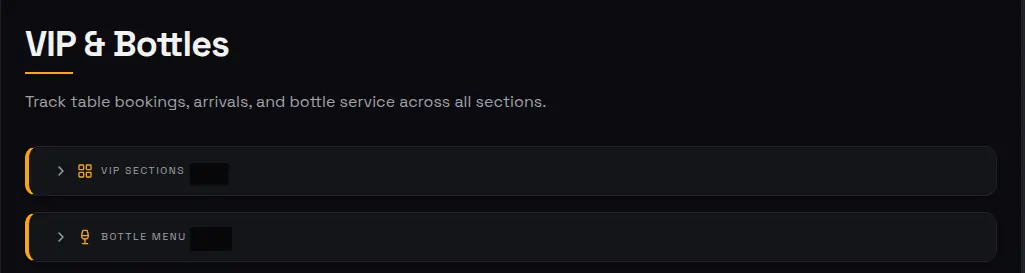
- The example screenshot illustrates VIP controls only, not an automated end-to-end shift or a real customer's results.